Doughs:
Sauces:
MAKE THE DOUGH
Make your dough of choice and let it rest, tightly covered, at room temperature for 1 hour—a completely relaxed dough will make for easier rolling.
SET UP YOUR WORKSPACE
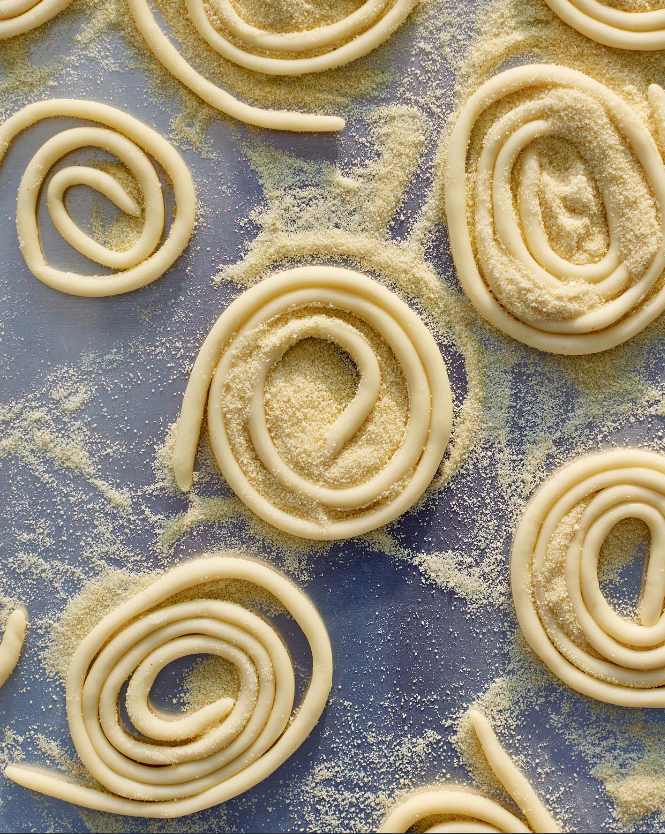
Dust a sheet pan with semolina or line it with a dry dishcloth. Gather your tools. Pour a little olive oil into a small bowl.
ROLL, OIL, AND CUT THE DOUGH
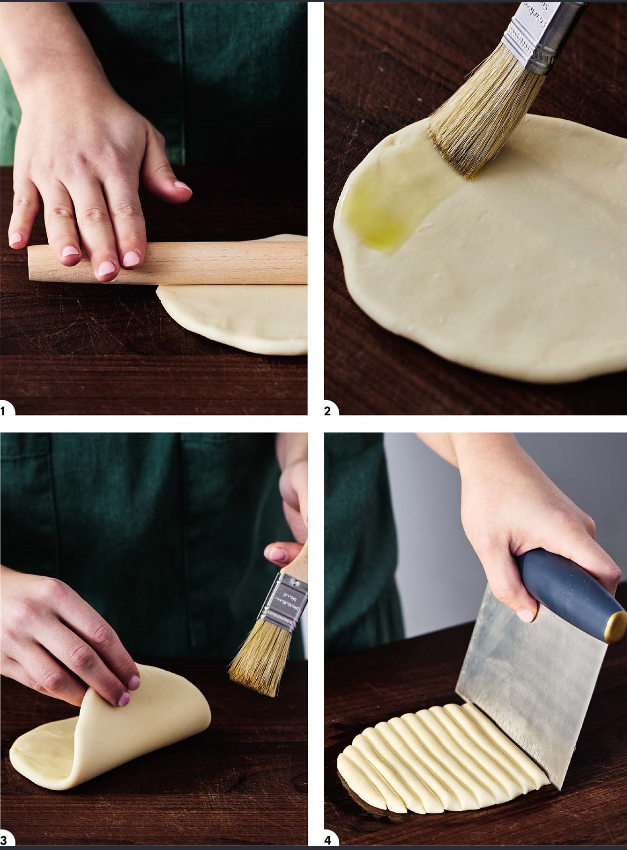
Cut off a quarter of the dough and keep the rest covered. Flatten the dough with the palm of your hand into a rough oval. With a rolling pin (or wine bottle), roll the dough into a ¼-inch (6-mm) thick slab, about the thickness of pita bread.
With a pastry brush or your fingers, coat the dough completely in a thin layer of olive oil—get the front, back, and edges. This will prevent the surface from drying out and cracking.
Use a bench scraper or sharp knife to slice the dough into strips roughly ¼ inch (6 mm) wide. They will all be different lengths.
MAKE THE PICI
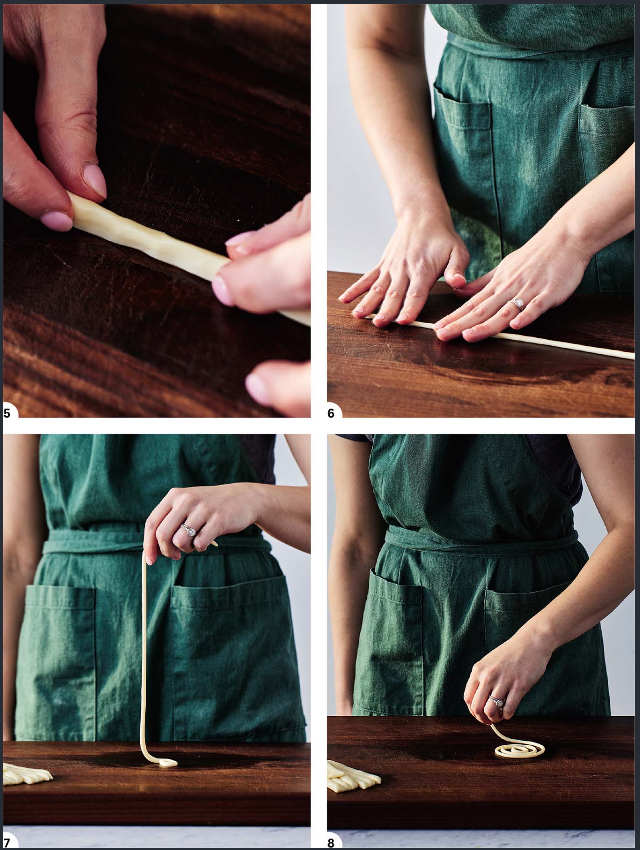
Position one of the strips horizontally on your work surface and move the other pieces to the side. Pinch the sides of the strip upward so it’s more cylindrical. Then, starting in the center, use your fingers to roll the strip of dough into a thin strand—first back and forth, until the surface is smooth, and then outward in opposite directions, eventually making your way toward the ends. The goal is a strand that’s 2 to 3 mm thick.
Repeat the process with the remaining strips, and then the remaining dough. If the pieces start to dry and crack on the surface as you roll, add a touch more olive oil. If any of them break, don’t sweat it—now you have two!
COOK THE PASTA
If cooking the pasta shortly after shaping, coil the finished strand into a loose spiral, making sure there’s a little space between the concentric circles, and place it on the prepared sheet pan (you can also line them up in a row). If storing for future use, dust each strand in semolina on the sheet pan before coiling and freeze the pasta.
Cook the pici until tender but with some bite, 3 to 5 minutes, depending on their thickness.